
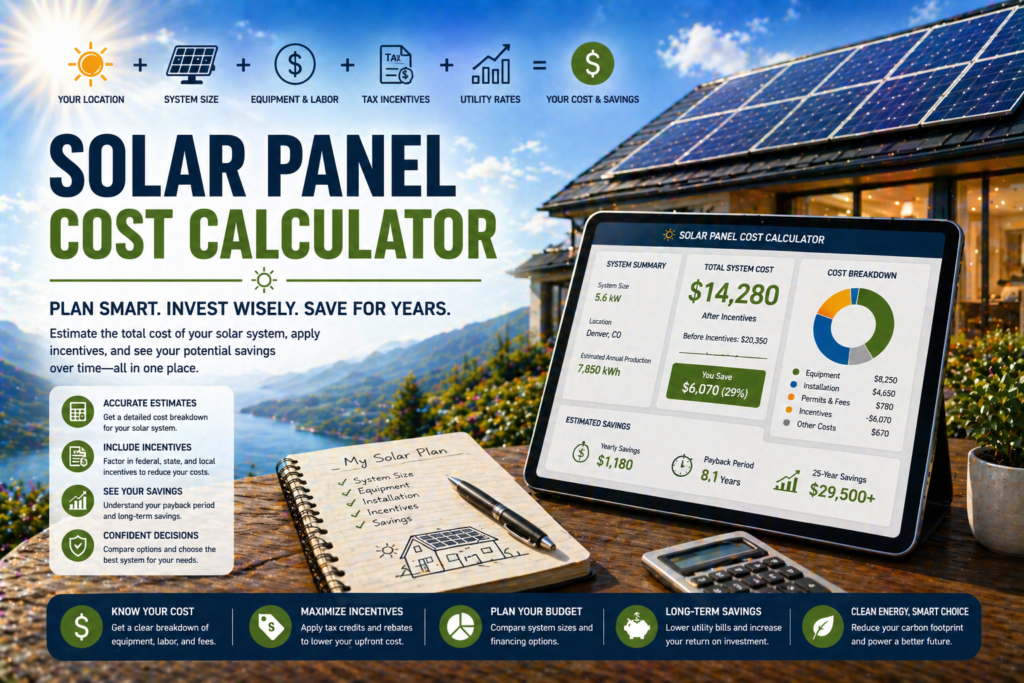
Solar Panel Cost Calculator – Accurate System Cost Estimator
Estimate the total cost of your solar system based on system size, equipment, installation, and real-world factors. Use Simple Mode for a fast ballpark figure or Advanced Mode to break down every cost line — panels, inverter, batteries, racking, installation, and permits — for a full, decision-grade analysis.
How To Use
Use this calculator to estimate the total cost of your solar system. Follow these steps to generate an accurate and practical cost breakdown.
Step 1: Enter System Size
Input your system size in kilowatts (kW). If unsure, use your energy usage to estimate system size first.
Step 2: Enter Cost per Watt
Input the cost per watt. Typical ranges are $2–$4 depending on system type and location.
Step 3: Add Optional Costs
In Advanced Mode, include battery costs, installation, permits, and additional equipment.
Step 4: Calculate Total Cost
The calculator combines all inputs to give a total system cost and cost breakdown.
Using Advanced Mode (Recommended)
Advanced Mode gives you a detailed breakdown of all costs, allowing you to model a real project instead of relying on estimates.
- Add battery storage costs
- Include installation and labor
- Factor in additional equipment
- Adjust pricing for real-world conditions
Simple Mode
Best for quick cost estimates based on system size and average pricing.
Advanced Mode
Best for detailed cost planning and accurate project estimates.
Best Practice: Always include a contingency buffer (10–20%) in your budget to account for unexpected costs and price variations.
Solar Panel Cost Calculator
Estimate installed solar cost, net incentives, annual production, payback period, 25-year return, battery impact, and whether the system makes financial sense.
Quick Presets
Choose a starting point, then adjust the details.
Location & Pricing Profile
These assumptions adjust cost per watt, sun hours, electricity rate, and incentive defaults.
System Size & Installed Cost
Installed cost per watt usually includes panels, inverter, racking, wiring, design, and installation.
Decision Summary
Results update automatically as you adjust the inputs.
Continue Planning After Cost Estimation
Once you estimate your solar panel cost, the next step is validating system size, confirming energy production, ensuring your battery capacity is correct, and calculating long-term value.
Solar Array Planner
Determine how many panels you actually need based on your energy goals.
Solar Panel Output Calculator
Verify how much energy your investment will realistically produce.
Battery Bank Size Calculator
Ensure your battery storage matches your solar investment.
Solar Payback Period Calculator
Calculate how long it will take for your system to pay for itself.
How To Use
Use this calculator to estimate the total cost of your solar system. Follow these steps to generate an accurate and practical cost breakdown.
Step 1: Enter System Size
Input your system size in kilowatts (kW). If unsure, use your energy usage to estimate system size first.
Step 2: Enter Cost per Watt
Input the cost per watt. Typical ranges are $2–$4 depending on system type and location.
Step 3: Add Optional Costs
In Advanced Mode, include battery costs, installation, permits, and additional equipment.
Step 4: Calculate Total Cost
The calculator combines all inputs to give a total system cost and cost breakdown.
Using Advanced Mode (Recommended)
Advanced Mode gives you a detailed breakdown of all costs, allowing you to model a real project instead of relying on estimates.
- Add battery storage costs
- Include installation and labor
- Factor in additional equipment
- Adjust pricing for real-world conditions
Simple Mode
Best for quick cost estimates based on system size and average pricing.
Advanced Mode
Best for detailed cost planning and accurate project estimates.
Best Practice: Always include a contingency buffer (10–20%) in your budget to account for unexpected costs and price variations.
How the Calculation Works
A solar panel cost calculator estimates total system cost by combining system size (in kW) with average cost per watt, then adjusting for real-world components such as inverters, batteries, installation, and additional equipment. The base calculation gives a starting estimate, while advanced inputs refine the total to reflect actual project costs.
Real-world solar pricing varies depending on system type (grid-tied vs off-grid), equipment quality, installation complexity, and whether batteries are included. Advanced mode allows you to customize each component so the final estimate reflects a true project cost rather than a generic average.
Step 1
Enter your desired system size in kilowatts (kW) or calculate it using your energy usage.
Step 2
Apply a cost per watt value to estimate base system cost (typically $2–$4 per watt depending on setup).
Step 3
Add optional components like batteries, installation, permits, and additional hardware.
Step 4
The calculator combines all inputs to give a total project cost and cost breakdown.
Core concept: Total Cost = (System Size × Cost per Watt) + Equipment + Installation + Optional Components. Larger systems and battery storage significantly increase total cost.
Did You Know
Cost Per Watt Is the Key Metric
Most solar systems are priced based on cost per watt. Even small changes in this value can significantly impact your total system cost.
Batteries Can Double the Cost
Adding battery storage can increase total system cost by 50% to 100% depending on capacity and quality.
Installation Is a Major Expense
Labor, permits, and installation can make up 30% to 50% of the total solar system cost.
Off-Grid Systems Cost More
Off-grid systems require batteries, charge controllers, and larger system capacity, making them more expensive than grid-tied setups.
Key Insight: The cheapest solar system is not always the best. Efficiency, durability, and long-term savings matter more than upfront cost.
Results Interpretation
Your results show the estimated total cost of your solar system based on system size, cost per watt, and optional components like batteries and installation. This provides a realistic project cost rather than a basic estimate.
Base System Cost
This is calculated using system size multiplied by cost per watt. It represents the core cost of your solar panels and system components.
Total Project Cost
This includes all additional costs such as batteries, installation, permits, and extra equipment.
Cost Breakdown
Understanding the breakdown helps you identify where costs are highest and where savings may be possible.
Cost Guide:
• $5,000–$10,000: Small systems or partial setups
• $10,000–$25,000: Average residential systems
• $25,000–$50,000+: Large or off-grid systems with batteries
Costs vary significantly based on system size, location, equipment quality, and installation complexity.
Example Calculation
This example shows how to estimate the total cost of a solar system using system size, cost per watt, and additional components.
System Inputs
System Size: 6 kW
Cost per Watt: $2.50
Battery Cost: $6,000
Installation: $5,000
Extras: $1,500
Base Formula
Base Cost = System Size × 1000 × Cost per Watt
Total Formula
Total Cost = Base + Battery + Installation + Extras
Step-by-Step Breakdown
Step 1: Calculate base system cost
6 × 1000 × 2.50 = $15,000
Step 2: Add battery cost
$15,000 + $6,000 = $21,000
Step 3: Add installation
$21,000 + $5,000 = $26,000
Step 4: Add extras
$26,000 + $1,500 = $27,500 total cost
Base Cost
Total Cost
System Size
Real-World Tip: Costs vary widely depending on equipment quality and location. Always include a safety buffer when budgeting your solar system.
Expert Tips
Solar system pricing varies widely. These expert insights help you avoid common mistakes and build a system that delivers long-term value.
Focus on Cost per Watt
Cost per watt is the most important metric when comparing solar systems. It allows you to compare different system sizes accurately.
Don’t Underestimate Battery Costs
Battery storage can significantly increase total system cost. Always factor it in for off-grid or backup systems.
Installation Can Vary Widely
Labor and installation costs depend on location, roof type, and system complexity. Get multiple quotes when possible.
Bigger Systems Lower Cost per Watt
Larger systems often have a lower cost per watt due to economies of scale, improving overall value.
Advanced Cost Considerations
- Include maintenance and long-term replacement costs
- Consider incentives or rebates in your region
- Factor in energy savings over time
- Account for system efficiency and performance
- Plan for future expansion
Cost per Watt Range
Installation Share
Recommended Buffer
Expert Insight: The best solar investment is not the cheapest upfront system, but the one that delivers the highest long-term savings and reliability.
Comparison Table
This table compares typical solar system costs based on system size and configuration to help you understand pricing ranges.
Key Insight: Adding battery storage significantly increases system cost, but provides energy independence and backup power capabilities.
Visual Insight
Solar system cost increases with system size and additional components like batteries and installation complexity. This visual shows how quickly total cost scales.
Cost Growth by System Size
Small System (2–4 kW)
Medium System (5–8 kW)
Large System (8–12 kW)
Off-Grid System (10+ kW)
System Size Impact
Larger systems cost more upfront but often provide better long-term value due to lower cost per watt.
Battery Impact
Adding batteries significantly increases total cost but provides energy independence and backup capability.
Planning Insight: The best system balances upfront cost with long-term savings, reliability, and your specific energy needs.
Planning Advice
A properly planned solar system ensures you maximize value while avoiding unnecessary costs. Use these guidelines to make smarter investment decisions.
Size Your System Correctly
Avoid oversizing or undersizing. Match your system size to your actual energy usage for the best return on investment.
Consider Long-Term Savings
Focus on lifetime energy savings rather than just upfront cost to evaluate the true value of your system.
Plan for Future Expansion
Leave room to expand your system later as energy needs increase or technology improves.
Balance Cost and Quality
Cheaper systems may have lower efficiency or shorter lifespan. Invest in quality components for better long-term performance.
Common Cost Mistakes
- Focusing only on upfront cost
- Ignoring installation and labor expenses
- Underestimating battery costs
- Not including contingency budget
- Choosing the cheapest components
Contingency Buffer
Cost per Watt
System Lifespan
Final Advice: The best solar investment is one that balances cost, performance, and long-term savings—not just the lowest upfront price.
Key Expansion Insights
How much does a solar panel system cost?
The cost of a solar panel system depends on system size, cost per watt, installation, and whether batteries are included. Most residential systems range from $10,000 to $30,000.
What is the average cost per watt for solar?
The average cost per watt typically ranges from $2 to $4 depending on system type, location, and installation complexity.
Is solar worth the cost?
Solar can provide long-term savings on energy bills, especially in high electricity cost areas. The value depends on system efficiency, energy usage, and incentives.
How much do off-grid solar systems cost?
Off-grid systems are more expensive due to batteries and additional components. Costs typically range from $25,000 to $70,000 or more.
What increases solar system cost the most?
The biggest cost drivers are system size, battery storage, installation complexity, and equipment quality.
Solar Cost FAQ
Frequently Asked Questions About Solar Panel Costs
These answers explain how solar panel pricing works, what affects your total installed cost, how batteries and incentives change the final number, and how to judge whether a solar system is financially worth it.
How much does a solar panel system cost?
Most residential solar panel systems cost between $10,000 and $30,000 before incentives, but the final price depends on system size, cost per watt, roof complexity, equipment quality, battery storage, and local installation costs. A small grid-tied system may cost less, while a large off-grid solar system with batteries can cost significantly more.
What is the average cost per watt for solar panels?
The average installed solar cost is commonly estimated between $2 and $4 per watt, depending on location, installer pricing, equipment quality, roof type, and whether battery storage is included. Cost per watt is one of the best ways to compare solar quotes because it shows whether a system is fairly priced for its size.
Do solar batteries increase the total system cost?
Yes. Solar batteries can add thousands of dollars to the total project cost. In many cases, battery storage can increase the price by 30% to 70% or more, depending on battery capacity, brand, chemistry, inverter setup, and installation complexity. Batteries are usually best justified when backup power, off-grid use, or time-of-use savings matter more than the shortest payback period.
Is solar worth the investment?
Solar is usually worth it when your electricity rates are high, your roof has good sun exposure, incentives are available, and your payback period is reasonable. A strong solar investment often has a payback period under 7 to 12 years. If the payback stretches beyond 16 to 20 years, compare cheaper quotes, reduce system size, or review whether the assumptions are too optimistic.
What affects solar system cost the most?
The biggest cost factors are system size, installed cost per watt, battery storage, roof type, electrical upgrades, permit requirements, inverter type, and installer pricing. Battery storage and complex installations usually create the largest price jumps. This is why two systems with the same panel size can have very different total costs.
What hidden costs should I include in a solar estimate?
Common hidden solar costs include permits, inspection fees, electrical panel upgrades, trenching, roof repairs, battery installation, monitoring hardware, backup transfer equipment, and future inverter replacement. A good solar estimate should include more than just panel and inverter pricing.
How do incentives affect solar panel cost?
Incentives reduce your net cost after the gross project price is calculated. Depending on your location, incentives may include federal tax credits, state or provincial rebates, local utility programs, net metering credits, or renewable energy credits. Always compare both the gross cost and the net cost after incentives.
How long does it take for solar panels to pay for themselves?
A typical solar payback period is often between 7 and 12 years, but it can be shorter or longer depending on electricity rates, system cost, incentives, solar production, and financing. The fastest paybacks usually happen when electricity rates are high, the system is priced well, and most of the solar energy is used on-site.
Related Tools for System and Financial Planning
These tools help refine energy usage, system sizing, wiring, and overall planning without duplicating the main next-step links above.
Solar Energy Consumption Calculator
Break down your energy usage to better plan your solar investment.
Solar Inverter Size Calculator
Ensure your inverter matches your system capacity and budget.
Solar Wire Size Calculator
Ensure your system is safely wired to protect your investment.
Off-Grid Power Planner
Bring cost planning into a complete off-grid system strategy.