
Off Grid Living Tools · Maintenance & System Health · Task 052
Water Tank Inspection & Cleaning Planner
Schedule tank inspections, document warning signs, plan cleaning downtime, and keep a practical record of off-grid water storage maintenance.
Open tank planner ↓Why water tank maintenance matters
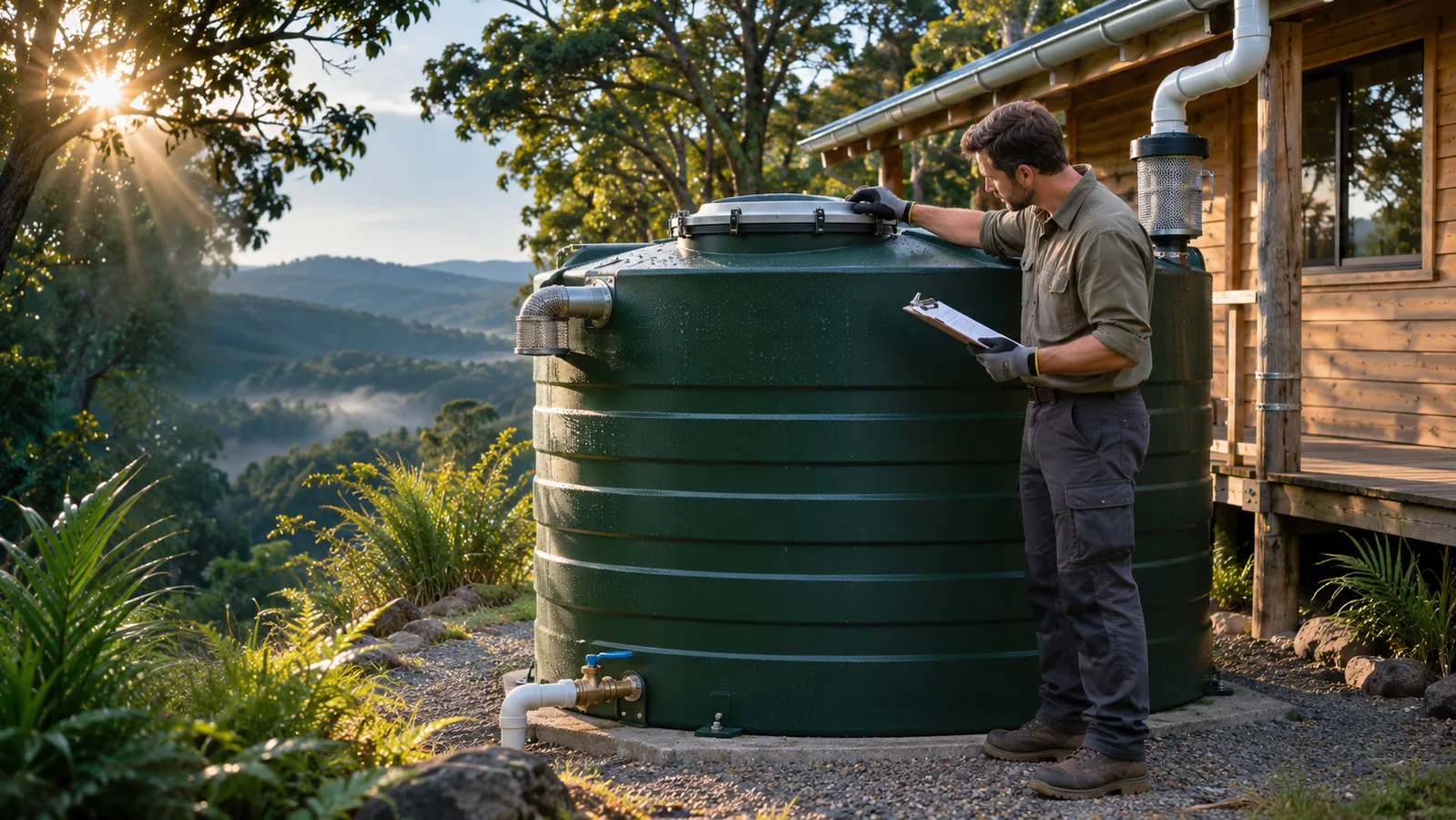
A covered water tank can still develop problems: damaged inlet screens, sediment accumulation, unsealed hatches, animal entry, leaks and signs of contamination. Regular documented external inspections help you notice changes before they compromise storage reliability. Cleaning and disinfection needs depend on the water source, use, tank type, and any contamination event—not one universal calendar rule.
Record lids, vents, overflow screens, fittings, sediment and leaks consistently.
Estimate replacement water needs while a tank is unavailable, then record work and follow-up testing.
How to use this planner
- Enter your tank identifier, intended water use, inspection date and last completed cleaning date.
- Select an inspection interval from the manufacturer or your documented maintenance plan; the sample default is not a recommendation.
- Check observations and choose whether the tank is fit for continued use, needs further assessment, or must be isolated.
- In Advanced mode, estimate tank volume and cleaning downtime or enter your known capacity.
- Calculate the schedule and save the inspection record; export JSON backups for restoration.
Safety: Never enter a water tank. Tank interiors can be confined spaces with oxygen-deficient atmospheres; maintenance may require trained professionals. Do not mix chemicals. A checklist, appearance, or calculated schedule does not establish potable-water safety. Suspected contamination requires appropriate isolation, testing and locally applicable professional guidance.
Water tank inspection workspace
Advanced mode adds capacity, downtime and refill planning; it never authorizes a disinfection procedure.
Inspection & cleaning plan
Manual JSON backup if downloads are blocked
Select all text below, copy it into a plain-text editor and save it with a .json extension. Keep the file private because your inspection notes may contain property details.
Inspection history & backup
Saved locally in this browser only. Clearing browser data can erase records. JSON is restorable; CSV is for spreadsheets and cannot be imported here.
How to interpret the plan
Inspection reminder
The inspection date plus the selected interval produces the next reminder. Your actual inspection frequency must reflect tank design, source water, conditions and applicable guidance.
Cleaning review
The last cleaning date plus the entered review interval gives a prompt to assess cleaning needs—not an automatic instruction to drain or disinfect.
Geometry and capacity
For a vertical cylinder, capacity is π × radius² × water height × 1,000 liters/m³. For a rectangular tank, capacity is length × width × water height × 1,000. The usable fraction is an assumption.
Downtime and refill
Backup water requirement is daily demand × outage days. Ideal refill time is usable liters ÷ measured refill liters/minute; actual flow can vary and treatment/commissioning may take longer.
Contamination precautions: Stop using suspect water for consumption until the situation is assessed. A tank that looks clean is not necessarily microbiologically safe. Flood events, animal intrusion and sewage exposure may require professional cleaning, disinfection and follow-up testing. Never treat a calculated volume as a bleach dose.
Practical inspection and cleaning considerations
- Inspect the exterior for sun damage, cracks, leaks, unstable foundations, loose lids and entry routes for insects or animals.
- Check guttering, first-flush devices, screens and overflows as applicable; avoid opening potable-water systems unnecessarily.
- Document unusual taste, odor, turbidity or debris, but use proper water-quality testing rather than appearances to assess drinking safety.
- Plan alternative safe water, isolation, pump shutdown, waste-water disposal, contractor access and service records before cleaning.
- Follow manufacturer-approved cleaning materials and competent local advice for disinfection or re-commissioning.
Useful water tank maintenance equipment
These product-category searches help locate potentially useful supplies. Check your tank specification, potable-water material compatibility, and local availability before purchasing. Home test strips cannot replace accredited microbiological testing.
Rainwater inlet filter / leaf strainer
Reduce incoming debris before it enters a covered storage tank; choose fittings compatible with your tank.
Click for the latest priceWater leak detection alarm
Monitor accessible connections near tank outlets and indoor plumbing for unexpected leaks.
Click for the latest priceWater quality screening supplies
Useful for certain initial observations, but not a substitute for laboratory water safety testing.
Click for the latest priceRechargeable inspection flashlight
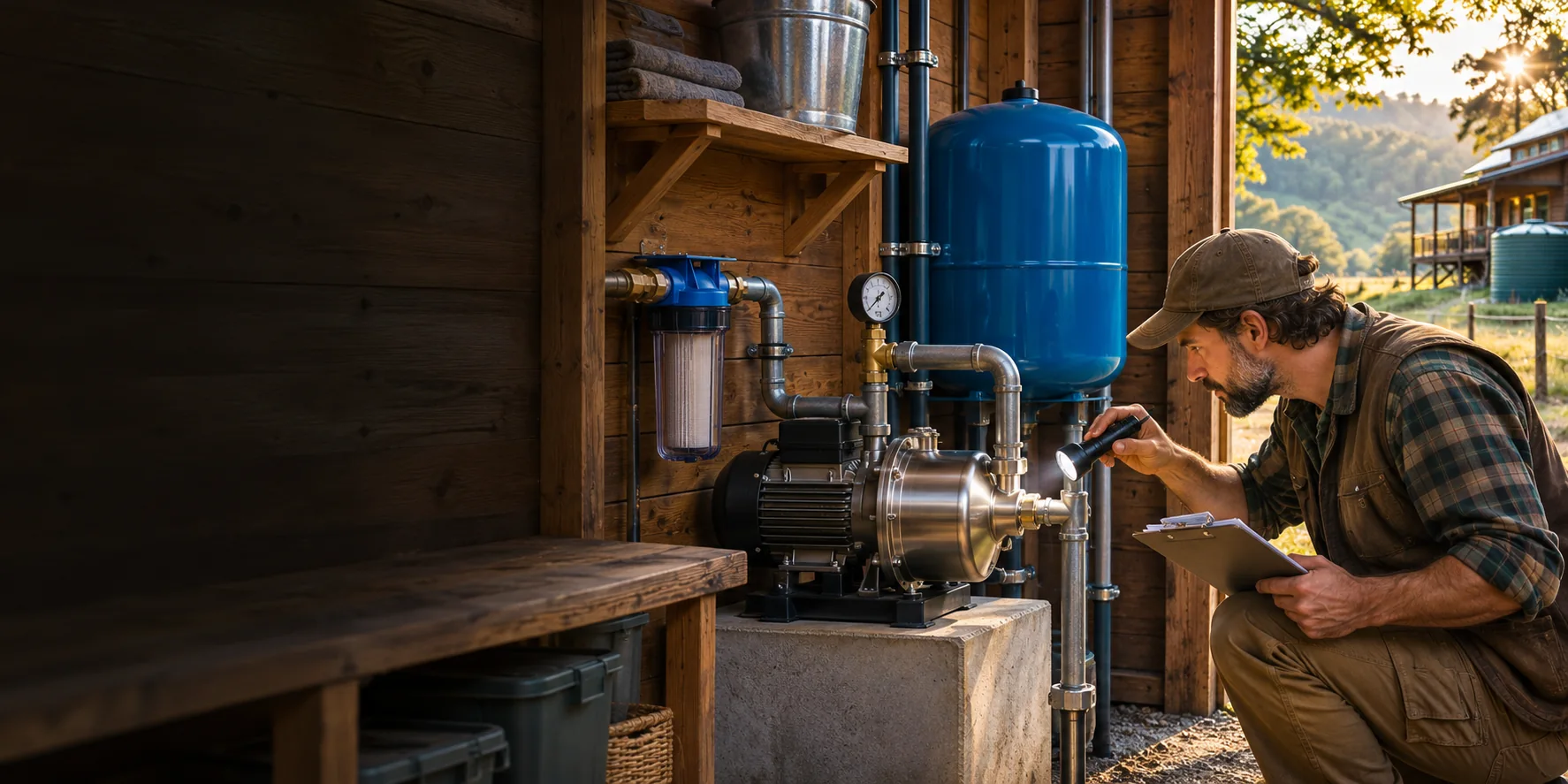
Inspect accessible exterior hatches, vents and plumbing without tank entry.
Click for the latest priceRecommended tools
What’s next?
Task 053 — Water Filter Replacement Tracker is next in the maintenance roadmap. It will be linked when published; this page does not send readers to an unpublished tool.
Frequently asked questions
How often should I inspect a water tank?
There is no single interval for every tank. Follow the manufacturer, local requirements and your documented risk assessment; inspect promptly after storms, flooding, repairs or suspected intrusion.
Does a reminder mean the tank must be cleaned?
No. It prompts a review. Cleaning decisions depend on sediment, contamination events, tank design, water use and competent guidance.
Can I enter a tank to clean it?
Do not enter a tank. Interior entry can create life-threatening confined-space hazards and must be handled by properly qualified personnel with appropriate procedures.
Can this planner confirm drinking-water safety?
No. It logs observations and schedules. Potability requires appropriate source protection, treatment, testing and applicable standards.
Will records sync to my other tools?
No. Records stay in this browser; download JSON backups and restore them manually when needed. The tool does not auto-sync with equipment inventory.
Sources and limitations
- CDC — Safe Water Storage
- CDC — Cistern Safety and Disasters
- WHO — Cleaning and Disinfecting Water Storage Tanks
- WHO — Sanitary Inspection of a Storage Tank
Calendar and volume outputs are planning aids. They do not assess microbiological safety, calculate disinfectant dosing, determine structural integrity, or replace professional inspection. Inputs are user-supplied and not externally verified.