
Off Grid Living Tools · Maintenance & System Health · Task 051
Water Pump Maintenance Tracker
Log pump inspections, spot pressure and flow changes, track operating hours, and plan preventive maintenance before small problems disrupt your water supply.
Open water pump tracker ↓Why water pump maintenance matters
A pump can still deliver water while gradually losing performance. Unusual vibration, higher electrical demand, slower tank refill, visible leaks, or frequent cycling are useful warning signs—especially in off-grid homes where water and electricity are both limited. A dated log helps separate a one-time observation from a developing pattern and gives a technician relevant evidence.
Know what changed
Compare readings with your own reference conditions and preserve observations from different visits.
Plan service
Calculate upcoming inspection dates and hours-based service without implying one schedule suits every pump.
How to use this tracker
- Identify the pump and select the inspection date.
- Enter the last service date and manufacturer-recommended day or operating-hour interval.
- Record the running-hour meter and what you saw or heard.
- Choose Advanced for pressure, flow and electrical readings from suitable instruments.
- Calculate a maintenance summary, then save the inspection.
- Download JSON backups regularly; CSV is suitable for spreadsheets but cannot be restored here.
Safety: This is an observation log, not permission to open electrical enclosures, disconnect plumbing, touch rotating parts or adjust a pressurized tank. Isolate power and relieve pressure according to the manufacturer’s instructions; use a qualified technician for unsafe or unfamiliar tasks.
Water pump inspection workspace
The selected button is highlighted. Advanced mode reveals additional measured performance fields immediately below.
Inspection interpretation
Inspection history and backup
0 saved inspections
Records are stored in this browser only. They do not sync to your equipment inventory or maintenance schedule automatically.
Restore a Task 051 JSON backup
Warning: A successful restore replaces the Task 051 records currently saved in this browser. Export those records first.
Understanding your inspection results
Calendar service
The next inspection date is the last completed service date plus your entered interval. It is a scheduling aid, not the pump manufacturer’s prescribed service interval.
Run-hour service
When an hour-meter baseline and interval are available, the tracker calculates hours remaining. Run-hour and calendar schedules are independent: service may be due on either basis.
Pressure and flow
Changes at matched operating conditions can justify further inspection. Pressure alone is not proof of flow, and a simple percent difference is not a pump performance curve.
Water quality
Pressure and flow measurements do not establish potable water quality. Investigate contamination concerns and use appropriate accredited testing.
Common maintenance warning signs
- Leaks: Inspect for visible moisture; unexplained leakage deserves prompt assessment.
- Rapid cycling: May reflect several possible issues, including controls or the pressure tank—avoid assuming the pump itself is faulty.
- Unusual sound or vibration: Record when it occurs and seek professional evaluation if persistent.
- Lower flow: Check whether demand, water level, valves or filters changed before comparing against a baseline.
- Electrical faults or heat: Stop unsafe operation and arrange qualified inspection.
Do not troubleshoot live electrical components or pressurized equipment through this tool. Consult the exact pump manual and qualified service provider.
Useful water-pump maintenance equipment
When suitable for your system: a compatible water pressure gauge, flow meter, leak sensor, and water testing supplies can improve recorded observations. Choose products using pump specifications and drinking-water compatibility requirements.
Affiliate product links can be added once your approved Amazon Associates URLs are supplied. No unverified tracking links or prices are inserted.
Recommended tools
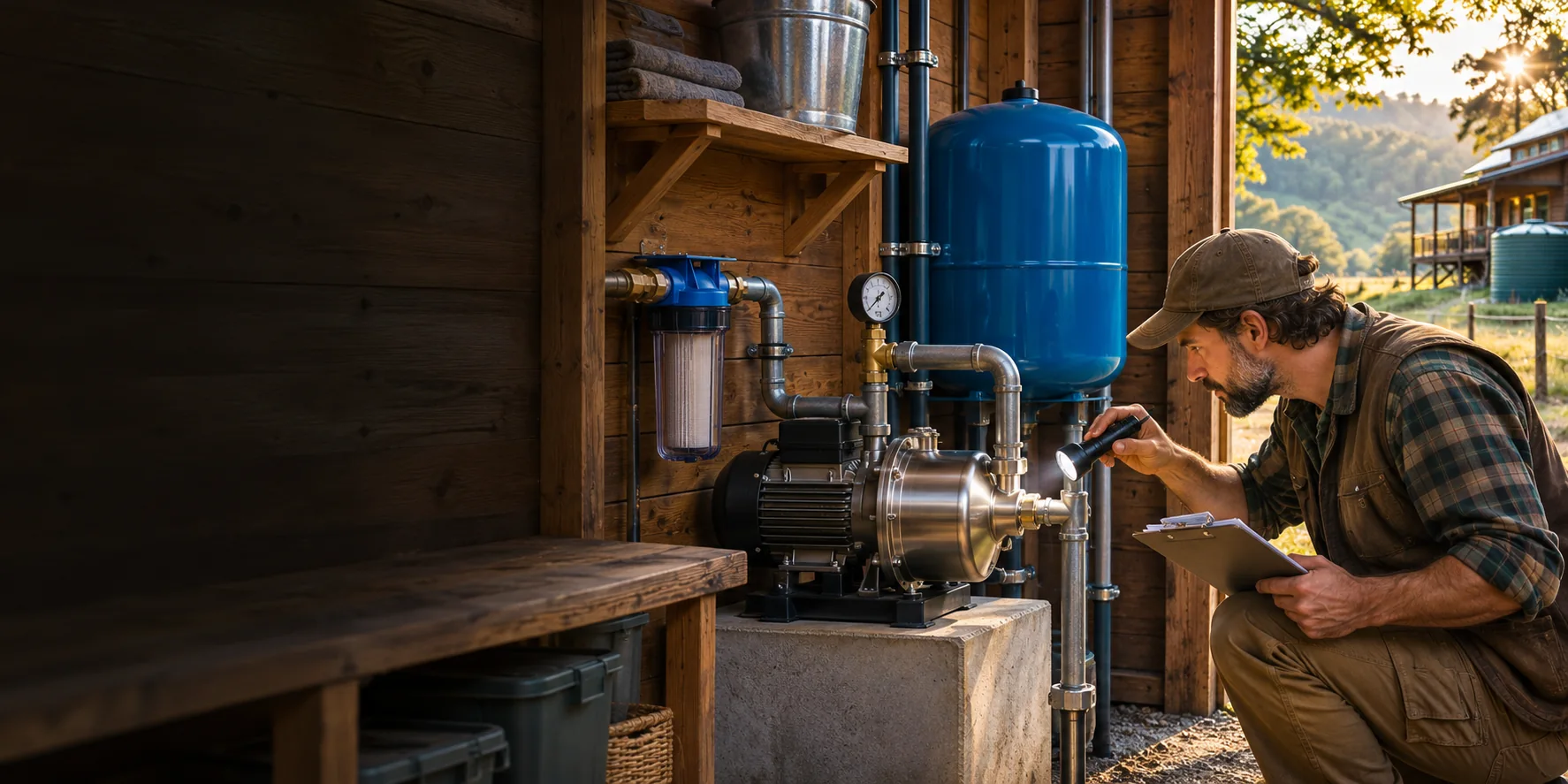
Only confirmed destination URLs are linked; add Task 052 and 053 cards with their own hero images once those pages are published.
What’s next for your water system?
Task 052 — Water Tank Inspection & Cleaning Planner will help record tank checks and cleaning plans, followed by Task 053 — Water Filter Replacement Tracker. These are upcoming tools; links will be added only once the pages are live and verified.
Frequently asked questions
How often should an off-grid water pump be inspected?
Use the pump manufacturer’s manual and operating conditions. The default 90-day interval is only an editable starting point, not a universal requirement.
Can this tracker diagnose a failing pump?
No. It logs symptoms and comparable readings, but faults can come from supply conditions, filters, pipes, valves, controls, tanks and instrumentation.
Can I track a submersible pump?
Yes. Record accessible observations and available instruments. Never pull or open a well pump solely to complete the log.
Does a normal flow reading mean my drinking water is safe?
No. Water quality requires separate testing appropriate to the source and local guidance.
Does the backup transfer to other devices?
Yes, if you download a verified JSON backup and restore it through this same tool on the other device. Saving alone stores records locally in your browser.
Sources and limitations
- Grundfos: Pump system maintenance considerations
- Penn State Extension: Well maintenance and rehabilitation
- CDC: Well water testing guidance
- CDC: Well safety during emergency repairs
This tracker computes calendar dates, run-hour differences and percent comparisons; it does not model pump curves, head loss, pressure-tank precharge, electrical safety or water potability. Results depend on entered readings and comparable measurement conditions.